
Ada Lovelace Day
Ada Lovelace Day is an annual international day of celebration held on the second Tuesday of October, honoring the achievements of women in science, technology, engineering and mathematics — and, in the founder's words, fighting not the absence of women in those fields but their invisibility.[1] It is named for Ada Lovelace, the nineteenth-century mathematician whose published notes on the Analytical Engine contain what is widely regarded as the first algorithm intended to be carried out by a machine.[2]
What began as a single day of coordinated blogging in 2009 is now a global observance marked by Wikipedia edit-a-thons, school events, conference programming, and a flagship live science evening in London — all coordinated by the Finding Ada organization.[3]
Origins: a pledge
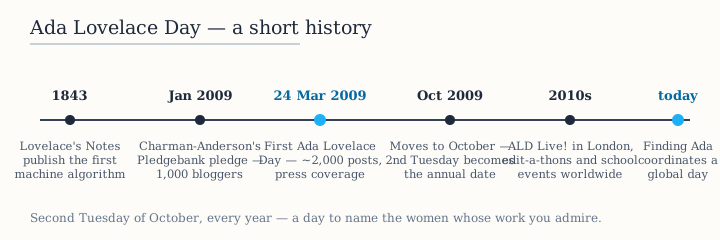
Ada Lovelace Day was founded by British technologist and writer Suw Charman-Anderson in January 2009, in response to a running frustration of the era's tech conferences: stages full of men, and the recurring claim that no women could be found to speak. Charman-Anderson's counter-argument was that the problem was visibility, not existence — and she set out to prove it in public.[4]
The mechanism was a Pledgebank pledge — the British civic-action site where promises only activated if enough others signed on:
"I will publish a blog post on Tuesday 24th March about a woman in technology whom I admire — but only if 1,000 other people will do the same."[5]
Nearly two thousand people signed, and on March 24, 2009 the first Ada Lovelace Day filled blogs, newspaper columns and — memorably — the debut of Sydney Padua's webcomic The Thrilling Adventures of Lovelace and Babbage. The day drew coverage in The Guardian, The Telegraph, the BBC and the computing press.[6]
From a Tuesday in March to the second Tuesday of October
The following year the observance moved to October and settled into its permanent rule — the second Tuesday of October — which keeps it clear of most holidays and makes the date easy to compute: October 13 in 2026, for instance.[7]
What the day became is bigger than blogging. The Finding Ada network grew around it — an organization devoted to women's visibility in STEM — and the flagship event became Ada Lovelace Day Live!, an evening of science cabaret hosted in London, where women researchers take the stage to present their own work: part lecture series, part variety show, all of it a pointed answer to the conference line-up problem the day was founded to fix.[8]
How it is observed
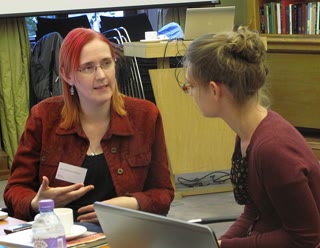
The day's signature activity remains what it was on the first one: telling the world about a woman in STEM whose work deserves to be known. Around that core, Ada Lovelace Day has accumulated rituals:
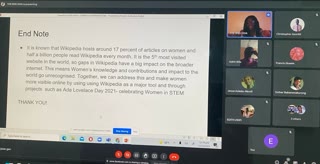
- Edit-a-thons — Wikipedia communities (notably the Women in Red project) run Ada Lovelace Day editing drives to write missing women scientists into the encyclopedia — a tradition with a sly edge, since Ada's own coverage long lagged her influence. Events have run from Wikimedia UK gatherings to edit-a-thons in Ghana, India and New Zealand.[9]
- Schools and universities — talks, panels and classroom sessions built around women scientists' stories.
- Workplaces and conferences — company events, lightning talks, and "name the woman whose work you admire" campaigns on social media.
- ALD Live! — the London flagship, an evening of stage science held each October.
The day's deeper claim is structural: girls choosing subjects and women choosing careers need visible predecessors. A holiday built entirely out of naming is, in that sense, a machine for manufacturing role models — one Lovelace, the woman who saw that a calculating engine could work on more than numbers, would presumably have appreciated the meta-design.[10]
Why Lovelace
The namesake earns her place twice over. In 1843 Ada Lovelace published her notes on Luigi Menabrea's memoir of Charles Babbage's Analytical Engine — notes triple the length of the original, containing the Bernoulli-numbers computation that makes her, by the usual accounting, the first person to publish a program. She also saw further than the machine's builder: where Babbage designed a calculator, Lovelace speculated about engines that could compose music and manipulate symbols.[11]
And she is the day's own subject matter: a woman whose work was signed only with initials, under-credited for a century and a half, and rediscovered as the patron saint of everyone the line-up forgot.
See also
- Ada Lovelace · Analytical Engine · Charles Babbage · Bernoulli numbers
- Grace Hopper · The first programmers · Nina Leontyeva · JoAnn H. Morgan · Donna Strickland
- The ALB Honor Roll — the site's tributes to the giants, Lovelace's successors included
Footnotes
- ↑ Finding Ada, "Meet ALD's Founder" — "the issue wasn't a lack of women, but their invisibility"
- ↑ Lovelace's translation of and notes on Menabrea's "Sketch of the Analytical Engine", Taylor's Scientific Memoirs (1843)
- ↑ findingada.com — "History of Ada Lovelace Day"
- ↑ Finding Ada, "Meet ALD's Founder"; S. Charman-Anderson, "Join me on Ada Lovelace Day", January 6, 2009
- ↑ Charman-Anderson, "Join me on Ada Lovelace Day", January 6, 2009 — the original pledge text
- ↑ findingada.com, "History of Ada Lovelace Day"
- ↑ Ada Lovelace Day observance rule — second Tuesday of October, per Finding Ada and Wikipedia
- ↑ findingada.com — ALD Live! event listings
- ↑ Wikimedia Commons — Ada Lovelace Day edit-a-thon documentation; Women in Red project
- ↑ Finding Ada, "About" — creating new role models to support girls' study choices and women's careers
- ↑ Lovelace, Notes A–G on Menabrea's Sketch (1843); see Ada Lovelace and Bernoulli numbers