
Konrad Zuse
Konrad Zuse (22 June 1910 – 18 December 1995) was a German civil engineer who, working alone in his parents' Berlin apartment, built the Z3 in 1941 — the first working, program-controlled, fully automatic digital computer — and then designed Plankalkül, the first high-level programming language ever conceived. He did it in wartime, in a living room, largely cut off from everything the rest of the world was doing. When the world finally looked, it found that computing had already happened — behind blackout curtains, on junk-store relays and punched film stock.
Before the machines
Zuse was born in Berlin in 1910 and grew up in Braunsberg, East Prussia, where his father was a Prussian postal official. The family moved to Hoyerswerda in Saxony in 1923, and there he finished school — the school building now carries his name. He was drawn to everything at once: painting, architecture, engineering. At the Technische Hochschule Berlin-Charlottenburg he settled on civil engineering and graduated in 1935.
What he took away from civil engineering was not a love of bridges. It was a hatred of the arithmetic.
Structural analysis — statics — ran on standardized forms: pages of the same calculations, worked by hand, row after row after row. Any competent student could see the pattern, and Zuse saw something further: the calculations were so mechanical that a machine could fill in the forms. That single irritation — a graduate student too impatient to keep doing the same sum — is where the stored program's German branch begins.
The living-room laboratory
In 1935 Zuse took a job as a stress analyst at the Henschel aircraft works — and walked away from it within the year. He moved back into his parents' apartment on Methfesselstraße in Berlin-Kreuzberg and turned the living room into a workshop, funded by family and friends who did not entirely understand what he was doing but believed in the young man doing it.
His friend Helmut Schreyer, an electronics student, urged him toward vacuum tubes for speed; Zuse chose telephone relays instead — slower, but available, understandable, and buildable by one man with a saw and a soldering iron. From 1936 he worked in near-total isolation. He did not know about Babbage's Analytical Engine until years later. He had never heard of Turing's 1936 universal machine. He independently invented binary floating-point arithmetic, a stored addressable memory, and program control — because the forms demanded it.
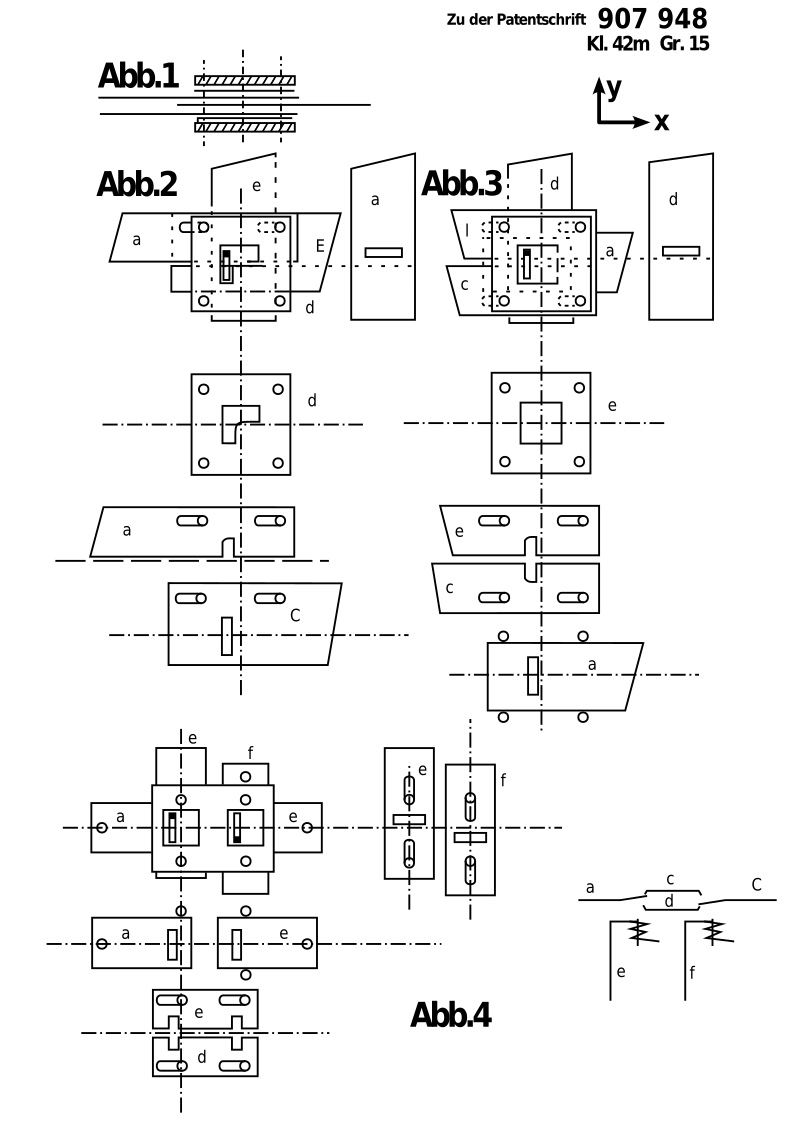
He filed patent applications as he built — methodically documenting a programmable computing device while the patent office processed paperwork for a country at war. It was a lonely kind of insurance: the applications were still pending when the machines they described were bombed to scrap, and the claims were ultimately refused after the war amid the "prior art" of a world that had, by then, caught up.
The Z machines
Z1
The Z1 (1936–38) was mechanical — a forest of slotted metal plates and pins, built with a jigsaw on the family's living-room table. It was already everything a computer needed to be: binary, floating-point, with a 64-word mechanical memory and punched-tape program control. It was also unreliable; precision mechanics asked more of hand-cut sheet metal than sheet metal could give. But the architecture was proven — and it was almost entirely the architecture the Z3 would inherit.
Z2
The Z2 (1939–40) was the bridge: Z1's memory kept in metal plates, but the arithmetic rebuilt in surplus telephone relays Schreyer helped source. It proved relays could carry his logic. Then the war took the materials, the funding, and very nearly Zuse himself — drafted in 1939, he was released back to engineering work in 1940 after his military superiors were persuaded that what he was building mattered.
Z3
The Z3, demonstrated to aviation researchers on 12 May 1941, is the machine history remembers: about 2,600 telephone relays, a 64-word memory of 22-bit floating-point numbers, program read from holes punched in 35 mm film stock. Fully automatic — start the tape and the machine ran alone. It ran calculations for aircraft wing flutter at the German Aeronautics Research Institute. Its full story is on its own page.
Z4
The Z4 was his wartime summit — more memory, a larger instruction set, the design refined by everything the first three machines taught. As Berlin began to burn in 1945, Zuse evacuated it south, first to Göttingen, then to a barn in Hinterstein in the Allgäu mountains — the only Z machine to survive the war. In 1950 it went to ETH Zürich: the first digital computer delivered commercially in continental Europe, running calculations for the Swiss until 1955.
The war
Zuse's machines were destroyed faster than he could rebuild them. The Z1 burned in an air raid in late 1943; the Z3 followed in the December bombing that gutted the Methfesselstraße workshop. He kept working — a special-purpose machine, the S2, for guiding Henschel's experimental glide bombs; the Z4; and, in notebooks, something stranger.
He asked the Reich's institutions for support and received mostly blank looks — one officer, in Zuse's own account, answered that Germany was already winning the war without computers. What funding he did get came through aviation: his machines did real work on wing flutter and structural analysis, the same statics that had driven him to build them.
And in the Allgäu, waiting out the end of the war in a farmhouse, he wrote the manuscript that would become Plankalkül — a full high-level programming language with types, structured data, conditionals, loops, and subroutines, designed for machines that were, at that moment, mostly ashes.
Zuse KG — the company the living room became
In 1949, in Neukirchen near Hünfeld in Hesse, Zuse founded Zuse KG — one of the first computer companies on Earth, years before the word "computer company" meant anything to anyone. From it came:
- Z4 — completed and leased to ETH Zürich, 1950; continental Europe's first commercial computer
- Z5 (1953) — built for the Leitz optics works; the company was now solving industry's arithmetic
- Z11 (1955) — the first serially produced Zuse machine; dozens sold, mostly to surveying and optical firms
- Z22 (1961) — transistorized at last; about fifty-five built
- Z64 Graphomat (1961) — a computer-driven flatbed plotter, digital drawing a decade before CAD had a name
At its peak in the early 1960s Zuse KG employed more than a thousand people. Then the arithmetic Zuse hated caught up with the business: undercapitalized against the American giants, the company slid into crisis in 1964. It passed to Brown, Boveri & Cie, and eventually into Siemens. The founder of computing's private industry watched his own company absorbed by it.
The other Zuses
Zuse contained multitudes that had nothing to do with relays:
- The painter — he painted all his life and exhibited under the pseudonym "Kuno See."
- The architect — his 1969 Helix Tower was a radical open-plan skyscraper concept, offices spiraling around a modular core; unbuilt, but studied.
- The physicist-philosopher — in Rechnender Raum ("Calculating Space," 1969) he proposed that the universe itself might be a vast discrete computation — the founding idea of what is now called digital physics, half a century before it became a serious research conversation.
- The memoirist — Der Computer – Mein Lebenswerk ("The Computer — My Life's Work," 1970) is his own account, written before the world had fully decided he deserved one.
Recognition, at last
The world's credit arrived slowly, then all at once:
- 1982 — the IEEE Computer Pioneer Award, for "the invention of the first program-controlled, electromechanical, digital computer and the first high-level programming language, Plankalkül."
- 1987–89 — at nearly eighty, he personally supervised the reconstruction of the Z1 for Berlin's Deutsches Technikmuseum, rebuilding in a museum workshop what he had first built in a living room.
- Berlin's Konrad-Zuse-Zentrum für Informationstechnik — the Zuse Institute Berlin — carries his name today.
- Honorary doctorates, orders, and the steady revision of history books that had written him out.
He died at Hünfeld on 18 December 1995 — five days after the death, in the same month, of the era he had started without knowing it.
The "first" question, honestly
Was Zuse's Z3 the first computer? The honest answer is that it depends on which word you weight:
- The Atanasoff–Berry Computer (1942) was electronic and digital, but not programmable.
- Colossus (1943–44) was programmable and electronic, but special-purpose — and secret for thirty years.
- ENIAC (1945) was general-purpose and electronic, but decimal, and programmed by rewiring.
- The Z3 (1941) was programmable, binary, floating-point, and fully automatic — but electromechanical, not electronic.
The Z3 is widely and fairly described as the first working, programmable, fully automatic digital computer. Zuse's greater claim may be the quieter one: he invented the whole stack — machine, arithmetic, and language — alone, in one room, years before the people who got the funding.
See also
- Z3 · Plankalkül
- History of Programming
- Charles Babbage · Analytical Engine — the architecture he reinvented unknowing
- Alan Turing · Colossus · ENIAC six · John von Neumann
- FORTRAN — the first high-level language the world actually used, twelve years after Plankalkül
- History of Mathematics
- History of Science